Evaluating a Fun Gaming Avatar Mascot for Your Brand Identity
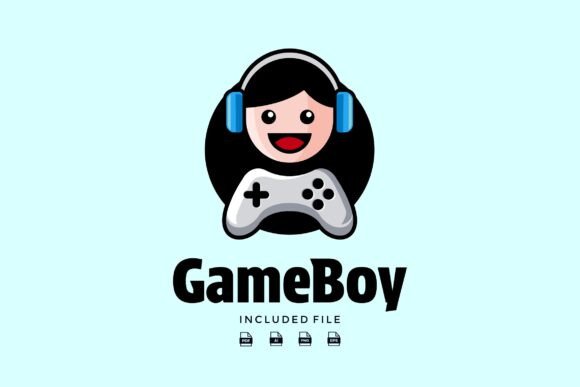
In the crowded landscape of gaming content, a distinctive visual identity can make the difference between being remembered and being overlooked. A fun gaming avatar mascot serves as the face of your channel, community, or brand—a single image that communicates energy, approachability, and the joy of play. One particular style that has gained traction features a gamer mascot with black hair, wearing blue headphones, and holding a game controller, with a cheerful expression that embodies the spirit of playing games with full of fun. Its simple yet attractive design makes it a compelling candidate for logos, stream overlays, and social media profiles. But before you commit to this direction, it helps to understand how it compares with other mascot styles, where it excels, and where it might fall short.
What Defines This Particular Mascot Style
At its core, this fun gaming avatar mascot is defined by clarity and emotional resonance. The black hair and blue headphones are not arbitrary details—they create a recognizable silhouette that works well at small sizes, such as a Twitch thumbnail or a mobile app icon. The game controller in hand immediately signals the character’s purpose, while the cheerful expression communicates that the experience is positive, inclusive, and centered on enjoyment rather than competition or intensity.
The simplicity of the design is intentional. Unlike hyper-detailed characters that require full-color renders to be legible, this style relies on clean lines and flat or lightly shaded colors. That makes it adaptable across formats: it can be animated for a stream intro, printed on merchandise, or reduced to a favicon without losing its core identity. The cheerful expression, in particular, acts as a tonal anchor for your brand. If you want your audience to associate your content with fun, energy, and approachability, this expression does much of the work for you.
How It Compares with Alternative Mascot Approaches
When evaluating a fun gaming avatar mascot, it helps to consider the broader landscape of gaming mascot styles. Here are several categories you might encounter, along with the tradeoffs each presents.
Realistic or semi-realistic characters often appeal to brands that want to convey maturity, skill, or immersion. These mascots may feature detailed armor, realistic lighting, or lifelike facial expressions. However, they tend to be less scalable: a realistic face can look muddy when reduced to a small icon, and the production cost for high-quality renders or illustrations is significantly higher. The simple, cheerful style of our subject mascot is far more forgiving in these scenarios, and it avoids the risk of looking dated as rendering techniques evolve.
Minimalist geometric mascots reduce the character to basic shapes and colors—sometimes just a circle with headphones and a smile. While this approach is extremely scalable and modern, it can feel generic. The fun gaming avatar mascot described here strikes a middle ground: it has enough detail to be memorable (the hair, the headphones, the controller) but remains simple enough to be reproduced easily. It offers more personality than a pure geometric icon without the complexity of a fully rendered character.
Cartoon or exaggerated mascots often lean into humor, with oversized heads, googly eyes, or exaggerated expressions. These can be highly engaging for younger audiences or comedy-focused content. Yet they may feel mismatched for brands that want to appear professional or appeal to an older demographic. The cheerful but not over-the-top expression of this style makes it suitable for adults aged 20–50 who appreciate a fun tone without feeling like they are being marketed to with childish imagery.
Esports or competitive-style mascots typically use sharp lines, dark colors, and aggressive poses. They signal intensity and skill. If your content revolves around high-level ranked play, tournaments, or competitive analysis, a mascot with a calm smile and a controller might not match the energy you want to project. In that case, a more dynamic or stern expression might better align with your brand.
Strengths and Best-Fit Use Cases
The fun gaming avatar mascot with black hair, blue headphones, and a controller shines in several specific contexts.
- Streaming and content creation: A cheerful, simple mascot translates well into an emote set, an offline screen, or a transition animation. Its positive expression invites new viewers to stay and watch, and the clean design loads quickly on streaming platforms.
- Gaming communities and Discord servers: As a community icon, this mascot feels welcoming. It suggests that the space is oriented toward fun rather than toxicity, which can help attract a friendly audience base.
- Brands targeting casual or variety gamers: If your content spans multiple genres—from indie puzzle games to co-op shooters—a neutral, joyful mascot fits them all. It does not lock you into a single genre or tone.
- Merchandise and small-scale branding: Because the design is simple, it works on a t-shirt, sticker, or hat without needing expensive multi-color printing. The blue headphones and black hair create enough contrast to pop on light or dark backgrounds.
Another strength is the ease of iteration. If you commission a variation of this fun gaming avatar mascot—perhaps with an alternate expression, a different controller angle, or a seasonal accessory—the base design is straightforward enough that an illustrator can produce new versions quickly and affordably. This contrasts with complex mascots where every new expression requires reworking shadows, textures, or anatomy.
Where This Style Has Limitations
No single mascot approach works for every situation, and this style is no exception. Consider the following limitations before committing.
Lack of competitive edge. The cheerful expression is a strength for community-building but can feel out of place for content that emphasizes skill, rankings, or serious analysis. If your channel focuses on breaking down patch notes, reviewing pro play, or providing coaching, a more neutral or determined expression might suit your brand better. You could adapt this mascot by commissioning a variation with a focused expression, but the base design may still read as casual.
Gender and identity assumptions. The character has black hair and no obvious gender markers, which gives it some neutrality. However, some audiences may read it as male-presenting due to the relatively short hair and lack of stereotypical feminine cues. If inclusivity is a core value of your brand, you might want a mascot that explicitly embraces a broader range of representation—or you might lean into the gender-neutral aspects and use it as is, letting the community project their own interpretation.
Over-simplicity for large-scale brands. If your goal is to build a brand that spans publishing, events, or hardware, a mascot with this level of simplicity may not carry enough weight. Larger brands often use more detailed mascots that can be broken into multiple sub-elements for different use cases. For example, a mascot with a complex outfit might provide separate assets for a helmet, a weapon, or a logo lockup. This style is more monolithic—what you see is what you get, and it may not support extensive brand architecture.
Platform saturation. Blue headphones and a game controller are common tropes in gaming avatars. While this design is clean and well-executed, it might not stand out in a sea of similar concepts. If differentiation is your top priority, consider adding a unique color accent, a signature prop, or a slight tweak to the hairstyle that makes the mascot distinctly yours.
Decision Factors: When to Choose This Mascot
To determine whether a fun gaming avatar mascot is the right choice, evaluate your own brand needs across a few key dimensions.
Audience demographics. This mascot works best if your primary audience is adults aged 20–50 who enjoy gaming as a leisure activity rather than as a purely competitive pursuit. If your audience skews much younger or much older, the tone may need adjustment.
Brand personality. Rate your brand on a spectrum from casual to intense. This mascot sits firmly on the casual, welcoming end. If you want to feel like the friend who invites people to play together, it fits. If you want to feel like the expert who commands respect, consider a different direction.
Production budget and timeline. Because this style is simple, it is relatively inexpensive to commission and quick to produce. If you need a mascot within a week or on a tight budget, it is a practical option. More complex styles may require a longer creative process and higher cost.
Versatility across platforms. Test whether the mascot works in the environments you plan to use it. Does it look good as a small circle avatar on Discord? Can it be cropped to a square for YouTube without cutting off important details? This design passes those tests well due to its centered composition and clear silhouette.
Practical Comparison Thinking
Imagine you are comparing three mascot options for a variety gaming channel: a fun gaming avatar mascot with a cheerful expression and simple design, a more detailed character with a hoodie and glowing eyes, and a minimalist geometric headphone icon. Each has tradeoffs.
The detailed character may attract viewers who appreciate artistry, but it could be harder to animate and more expensive to modify for different seasons or events. The minimalist icon is extremely scalable and cheap, but it may not convey enough personality to build an emotional connection with viewers. The cheerful mascot sits between these extremes—it offers more personality than the minimalist icon and more practicality than the detailed character.
For a streamer who plays a mix of cozy games and action titles, this mascot provides enough neutrality to span both genres while still feeling fun. For a streamer who only plays ranked shooters, the same mascot would feel out of sync with the content.
Making an Informed Choice
Ultimately, selecting a fun gaming avatar mascot is about alignment with your content goals, audience expectations, and practical constraints. This particular style—black hair, blue headphones, game controller, cheerful expression—excels in situations where approachability and versatility are priorities. It works well for streamers, community leaders, and brands that want to emphasize the joy of gaming without locking themselves into a narrow niche.
If you need a mascot that conveys high-level competition, serious analysis, or a more complex brand architecture, you may need to look beyond this style or commission custom variations that retain the simplicity while shifting the tone. But for many small to medium gaming ventures, this mascot offers a smart balance of cost, clarity, and emotional impact. The key is to test it in your actual context—place it on your channel page, in a mock-up of a merchandise shirt, and as a small profile picture—then decide if the cheerful spirit matches the experience you want to deliver.
No mascot will be perfect for every use case, but understanding the tradeoffs helps you make a choice you won't feel the need to rebrand from six months later. And if your initial direction evolves, the simplicity of this design makes it one of the easiest to adapt, update, or expand without starting from scratch.