Gaming Controller Clipart Sublimation: How to Use This Digital Asset in Your Creative Workflow
When you work with print-on-demand, crafts, or digital products, the quality of your source material determines the speed and polish of your output. A single Gaming Controller Clipart Sublimation PNG file can serve as the foundation for dozens of projects—if you know how to integrate it into your planning, production, and distribution process. This article walks through the practical side of working with this specific asset: what it is, where it fits in a broader workflow, and how you can use it before, during, and after your creative or commercial projects.
What the Gaming Controller Clipart Sublimation File Actually Is
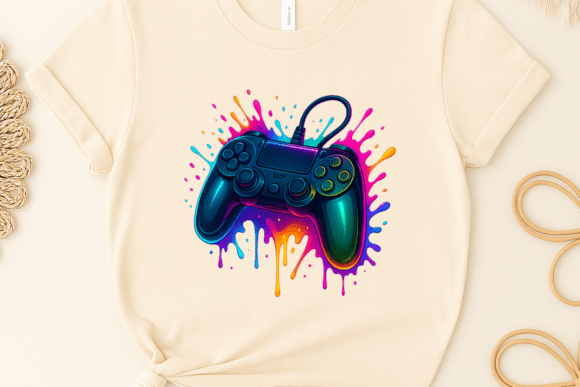
The asset you receive is a single high-resolution PNG with a transparent background. It is designed for sublimation printing—a process where heat transfers dye-based ink onto polyester or polymer-coated substrates. Because the file comes in crystal-clear HD resolution, it works equally well for digital products like stickers, social media graphics, and e-book covers. The transparent background means you can drop it into any layout without cutting around edges, saving minutes per design when you are producing at scale.
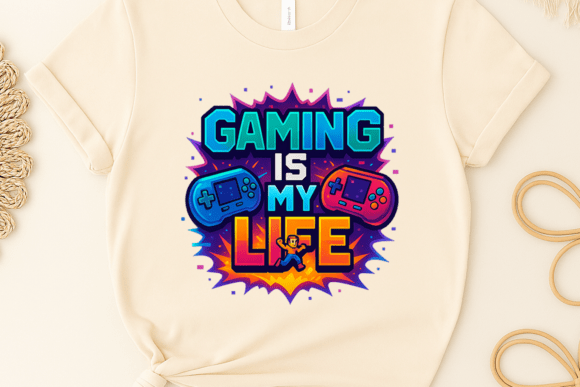
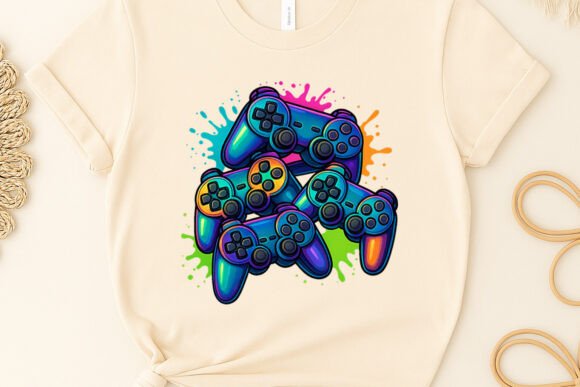
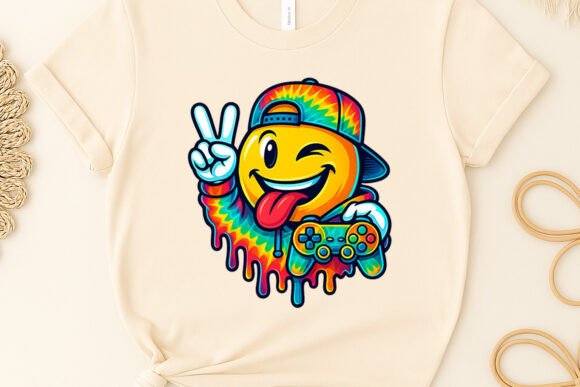
This particular graphic features a video gaming controller, a motif that resonates with a wide audience: gamers, tech enthusiasts, people in the e‑sports niche, and anyone creating content around streaming or retro gaming. The “k” in the description suggests a letter or initial variant (like a monogram style), which adds personalization potential for custom merchandise. That combination of a recognizable subject with a clean, scalable format makes it useful across many contexts.
Where This Clipart Fits in a Typical Workflow
Think of the Gaming Controller Clipart Sublimation file as a modular design component. You would introduce it at different stages depending on your role and goal:
- Before a project – Use it during the planning phase to mock up ideas. Because the file is ready to use, you can drop it into a template (t-shirt, mug, sticker sheet) and experiment with colors, placement, and size before committing to a full design.
- During creation – Many designers build their composition around a central graphic. This clipart can be the core element, layered with text, patterns, or other vector elements. Its transparent background lets you stack without rendering issues or white halos.
- After a product is made – The same file can feed your documentation, marketing materials, and social media posts. For example, you can use it to create a product mockup for an online store, then reuse it as part of a promotional banner or email header. One asset, multiple outputs.
This flexibility reduces the number of distinct files you need to manage. Instead of storing separate versions for print and digital, you maintain one master PNG and produce variations only when needed.
Compatibility and Tools That Work With This File
Because the asset is a standard PNG with transparency, it opens in nearly every graphics application. Here are the categories of software and hardware you can expect to integrate smoothly:
- Raster editors – Photoshop, GIMP, Affinity Photo, Procreate (on iPad). You can scale, adjust colors, and apply filters as needed.
- Vector-based applications – While the file itself is raster, you can place it inside vector documents in Illustrator, Inkscape, or Canva. It behaves like a placed image; just be mindful of resolution when scaling up beyond 100%.
- Sublimation printing software – Programs like Sawgrass CreativeStudio, PrintFactory, or even standard printer drivers accept PNG. The transparent background keeps the print white areas white if you are using a white toner printer or a typical sublimation system with white paper.
- Craft cutters – If you use a Cricut or Silhouette, you can import the PNG, convert it to a cut file using the trace function (for sticker sheets or heat-transfer vinyl), or keep it as a print‑then‑cut design.
Compatibility extends beyond software. The file can be used on Windows, macOS, iPadOS, and even cloud-based platforms like Google Workspace (for slide decks) or Notion (for project boards). No special plugins are required.
T‑Shirt and Apparel Sublimation
For garments, ensure you check the orientation of the controller graphic. Gamers often prefer the controller pointing left or right, depending on the design. Place the graphic so it appears correct when worn. Use a 300 DPI canvas and position the clipart in the center or upper chest area. If you are layering text or additional elements, keep the controller as the focal point—the transparent background makes blending effortless. Test print on one shirt before bulk production to verify color saturation and resolution.
Mugs, Tumblers, and Hard Goods
When sublimating onto curved surfaces, the clipart should be sized to fit the wrap area without distortion. Because the file is high resolution, you can scale it down without losing crispness. Center the graphic on the mug’s front face, leaving at least 10 mm clearance from the lip and bottom. If you use a tapered tumbler, test the placement with a paper template before pressing.
Stickers and Labels
Stickers are one of the simplest ways to monetize a single clipart file. Create a square or circular layout with a solid color background, then position the controller. Use a print‑then‑cut approach with a Cricut or Silhouette. The transparent background means you do not need to manually remove a white square after cutting. For vinyl stickers, apply an over‑laminate layer to protect the ink.
Digital Products and Social Media
E‑book covers, course thumbnails, and Instagram posts all benefit from a strong central image. Drop the controller onto a gradient background, add a bold title, and you have a professional-looking graphic in minutes. Because the asset is commercial‑use ready, you can sell the resulting digital product without additional licensing concerns.
Organizing Your Assets for Efficient Work
Long‑term use of any clipart collection depends on how you store and retrieve files. A few practical habits will keep this gaming controller asset easy to find and reuse:
- Name the file clearly. Instead of “controller1.png,” use something like “gaming-controller-sublimation-K.png”.
- Keep a master folder. Store all sublimation PNGs in a dedicated directory on your local drive and in cloud backup (e.g., Google Drive, Dropbox).
- Create shortcut collections. In design software, you can add the folder as a library or panel shortcut so you can drag the asset directly into new projects.
- Note usage context. If you used the file for a specific product, add a tag or note in a spreadsheet. Over time, this helps you identify which designs generated the most sales or engagement.
Because this is a single file, you might be tempted to neglect organization. But if you accumulate multiple graphics later, good habits built now will save hours of searching later.
Quality Control and Consistency Checks
Even though the file is professionally prepared, you should verify a few details before every use:
- Transparency – Open the file and confirm the background is truly transparent, not white. Sometimes download errors or browser previews flatten the image.
- Resolution – Check the pixel dimensions in your software. A minimum of 1500 x 1500 pixels is recommended for most sublimation projects. If your file exceeds that, you can scale down without quality loss. If it is smaller, avoid scaling up too much.
- Color mode – Sublimation printers often work in CMYK. If your design software converts RGB to CMYK automatically, preview the conversion to ensure the controller’s colors stay vibrant. If your software supports color management, assign the appropriate profile.
- Asset backups – Store the original download separately from your working copies. That way, if you accidentally overwrite or damage a file, you can always restore the clean version.
Taking these steps at the start of a project prevents costly reprints and wasted materials.
Integrating the Clipart Into a Broader Product Line
One file can seed an entire collection. For example, you could use the Gaming Controller Clipart Sublimation PNG to create:
- A t‑shirt design (front print)
- A matching tote bag
- A coffee mug
- A sticker sheet with multiple sizes
- A phone case insert
- A digital wallpaper or social media template
By repeating the graphic across formats, you build brand consistency. Customers who buy one product may be more inclined to purchase another because they recognize the design. This strategy works especially well if you sell on platforms like Etsy, Amazon Handmade, or a custom print‑on‑demand site.
The key is to treat the clipart as a family asset. You can colorize it differently for different audiences—neon colors for a retro gaming line, muted tones for a minimalist collection—using the same base PNG. This saves design time and keeps your catalog cohesive.
Common Mistakes to Avoid
Working with sublimation clipart is straightforward, but a few pitfalls can disrupt your workflow:
- Ignoring bleed – For products like mugs or garments, extend your design beyond the intended print area. Even with a transparent background, a slight misalignment can leave white gaps. Build a 3–5 mm bleed around the controller.
- Using low‑resolution sourced images – The file you download is high quality, but if you resize it too much in a project, it will pixelate. Stick to scaling within 80%–120% of the original dimensions.
- Forgetting the “k” element – The product description mentions a “k” variant. If your design relies on that letter (e.g., for a monogram or initial), make sure you position it legibly. Test readability at small sizes for stickers or labels.
- Skipping test prints – Especially when trying a new substrate or heat press settings, run one test print before batch production. Ink behavior varies by paper, time, and temperature.
Long‑Term Value and Future Proofing
Digital assets like this Gaming Controller Clipart Sublimation PNG do not degrade over time. A file stored correctly today can be used years later for new product lines, trends, or personal gifts. The commercial license gives you freedom to create and sell without per‑project fees. This makes it a cost‑effective resource for anyone who regularly produces merchandise or digital content.
To maximize longevity, keep your software updated so it continues to support PNG with transparency. Also, occasionally revisit your portfolio to see if the style of this clipart fits current market preferences. Even a classic controller design can be refreshed with new color palettes or combined with modern typography.
Conclusionless Final Thoughts
Integrating a Gaming Controller Clipart Sublimation PNG into your creative or business workflow is a matter of understanding its format, testing your tools, and planning how the asset will move from file to final product. Whether you are a one‑person shop fulfilling custom orders or a content creator building a branded line, this single graphic can serve as a reliable building block. Pay attention to preparation, organization, and compatibility—and you will get consistent, professional results every time you press “print.”