Hand Drawn Gaming Icon Set: A Practical Resource for Designers, Developers, and Content Creators
Visual assets form the backbone of modern digital projects. Whether you are building a mobile game, designing a streaming overlay, or producing educational content about gaming culture, the icons you choose shape how audiences perceive your work. A Hand Drawn Gaming Icon Set offers more than mere decoration—it provides a cohesive visual language that can streamline your creative process, improve user recognition, and add a distinct personality to your project. Understanding how to select, prepare, and integrate such a set into your workflow can save you time, reduce revision cycles, and elevate the final output.
What Defines a Hand Drawn Gaming Icon Set
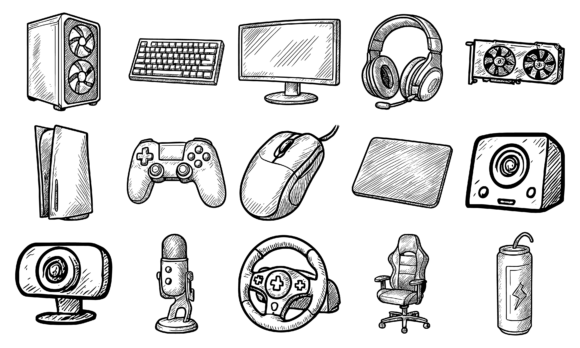
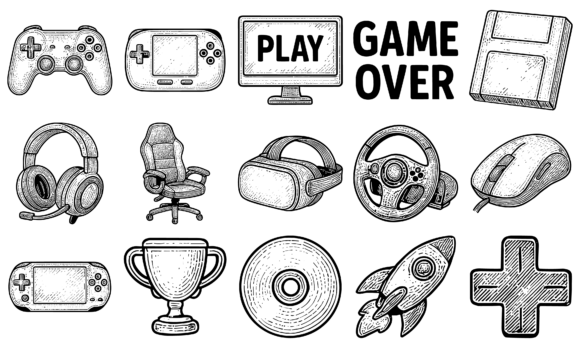
A hand drawn gaming icon set consists of illustrated symbols—such as controllers, joysticks, cartridges, characters, power-ups, and arcade elements—that are created with a hand-rendered aesthetic. Unlike purely vector-flat or photorealistic icons, these sets emphasize organic lines, uneven strokes, and a tactile feel reminiscent of sketchbooks or vintage game concept art. The result is a visual style that feels approachable, nostalgic, and distinct from the polished uniformity of many stock libraries.
These sets typically arrive as collections of individual files (PNG, SVG, AI, or EPS) organized by theme or usage category. Many include variations for light and dark backgrounds, as well as multiple color palettes. When evaluating a set, it helps to consider not just the visual appeal but also how the assets are structured for real-world implementation.
Where Hand Drawn Gaming Icons Fit in a Broader Creative Process
Integrating a hand drawn gaming icon set is rarely a standalone task. It touches multiple phases of a project lifecycle, from early ideation through final deployment. Recognizing where these icons add the most value helps you plan their use efficiently.
Pre-Production and Brainstorming
During the early stages of a project—whether you are outlining a game UI, storyboarding a video, or sketching a website layout—rough visual references help communicate ideas quickly. Hand drawn icons can serve as placeholders that convey tone and style without requiring polished final art. Their informal look actually works in your favor here: stakeholders and team members focus on layout and hierarchy rather than getting distracted by unfinished graphics. You can drop icons into wireframes or mood boards to test visual weight, spacing, and thematic consistency before committing to a final design direction.
Production and Asset Integration
Once your project moves into active development or content creation, the icon set becomes a functional tool. Designers can import the files directly into tools like Figma, Sketch, Adobe XD, or Photoshop. Developers working on game engines such as Unity or Godot can use the SVG or PNG variants to build HUD elements, menu options, or inventory screens. The hand drawn quality often reduces the need for additional texturing or stylization—the icons already carry a distinct aesthetic that can be layered with subtle shadows, outlines, or animation effects as needed.
If you produce video content, these icons work well as lower-thirds, transition elements, or callout graphics. Their organic lines contrast nicely with clean video footage or flat UI elements, creating visual interest without clashing. Streamers and online educators frequently use hand drawn gaming icons to label segments, highlight key points, or decorate overlays in a way that feels personal rather than corporate.
Post-Production and Quality Control
After the main build is complete, icon sets play a role in polishing and consistency checks. A well-organized set allows you to swap out mismatched icons without redoing entire layouts. You can batch-replace outdated graphics, adjust color overlays to match a new palette, or scale assets uniformly to meet resolution requirements. Because hand drawn sets often include multiple formats, you can maintain crisp visuals across web, mobile, and print outputs without re-exporting from source files each time.
Practical Workflow Examples
To illustrate how a hand drawn gaming icon set functions in real scenarios, consider three common use cases involving different roles and tools.
Example 1: An Indie Game Developer Building a Retro-Style UI
You are creating a 2D platformer with a hand-drawn visual style. Rather than hiring an illustrator to produce every button and indicator from scratch, you purchase a well-reviewed hand drawn gaming icon set. You import the SVG files into your Unity project and map them to the UI canvas. The icons for health, score, pause, and inventory already match the organic line quality of your character sprites. You spend the time you saved on customizing a few unique icons for power-ups specific to your game. The set also includes social media variants, so when you prepare a press kit or store page, you reuse the same assets for consistent branding across platforms.
Example 2: A Content Creator Building a Tutorial Series on Game Design
You plan a video series explaining game mechanics, and you want visuals that reinforce the subject matter without distracting viewers. You download a hand drawn gaming icon set and open it in your video editing software (DaVinci Resolve, Premiere Pro, or Final Cut). You assign each icon to a chapter marker, using the controller icon for hardware topics, a cartridge icon for software discussions, and a star icon for pro tips. The icons appear as on-screen graphics that support your narration. Because the set includes both color and monochrome versions, you can maintain readability against changing background footage. The hand drawn style cues viewers that this is a creator-driven, approachable series rather than a dry lecture.
Example 3: A Small Business Owner Designing a Gaming Lounge Website
You run an esports café and need a website that communicates energy and nostalgia. Your design team uses a hand drawn gaming icon set to build the navigation menu, service cards, and event highlights. The icons replace generic stock photos and give the site a cohesive, branded feel. Because the set is scalable, the icons remain sharp on high-resolution displays used by competitive gamers. You then repurpose the same icons for printed materials—loyalty cards, posters, and social media posts—ensuring a unified visual identity across touchpoints. The time saved on sourcing and formatting graphics allows you to focus on content writing and customer engagement strategies.
Integration with Tools, Platforms, and Other Assets
A hand drawn gaming icon set is rarely used in isolation. Its value multiplies when combined with complementary resources. For instance, pairing these icons with a hand drawn font or a textured background pattern creates a fully custom aesthetic without requiring a complete original illustration library. If you work with design systems, you can integrate the icons as a component library in Figma or Sketch, making them accessible to all team members with consistent naming conventions and export settings.
For developers, ensuring that the set includes SVG files allows for dynamic styling via CSS or code. You can change icon colors on hover, resize without quality loss, and combine with CSS animations for interactive feedback. This is particularly useful for web-based games, educational platforms, or interactive portfolios where performance and load speed matter. PNG variants with transparent backgrounds serve as fallback assets for older browsers or game engines that do not support vector formats natively.
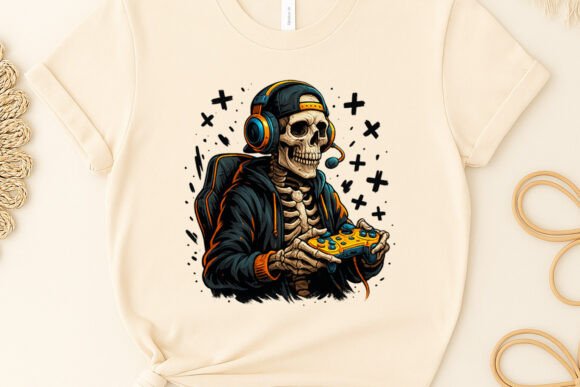
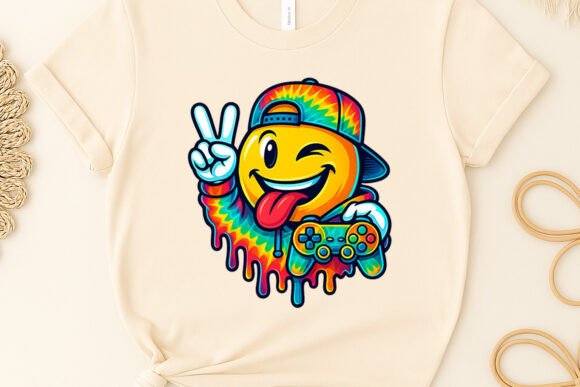
Print and merchandise workflows also benefit. Because hand drawn icons often feature closed paths and high-contrast lines, they convert well to single-color or two-color print designs. You can use them for T-shirts, stickers, posters, or packaging without heavy post-processing. Just ensure the set you choose offers high-resolution raster files (300 DPI or higher) or editable vector formats for print scaling.
Preparation, Organization, and Long-Term Usability
To get the most out of a hand drawn gaming icon set, invest time upfront in preparation and organization. This step is often overlooked, but it directly affects how smoothly the assets integrate into your ongoing work.
- Audit the set immediately after download. Open all folders, check file formats, and note any naming conventions or category structures. Some sets include subfolders by theme (arcade, retro, modern, etc.) while others group by color or icon type. Understanding the structure saves time later.
- Rename files according to your own naming conventions. If your project uses a specific taxonomy (e.g., icon_controller_24px.svg), apply it consistently. This makes searching and replacing much faster as the project grows.
- Create a master reference sheet. Place all icons on a single page or canvas with labels. This visual index helps non-design stakeholders (developers, writers, clients) quickly locate the right asset without opening each file individually.
- Set up color and size variants early. If you know you will need dark-mode, light-mode, and monochrome versions, generate them in batch using your design tool’s asset export features. This prevents scrambling for variants during crunch time.
- Back up the original files separately. Maintain an untouched master copy of the icon set so you can revert to defaults if custom edits go wrong or if you need to reuse the set in a future project without accumulated modifications.
Long-term usability also depends on the licensing model. Most commercial hand drawn gaming icon sets come with standard licenses covering web, app, and print use for a single user or team. Some extend to merchandise or broadcast use. Read the license terms carefully before distributing icons in products you sell or in content that generates revenue. Keeping a copy of the license file in the same folder as the icons prevents confusion later.
Quality Control and Consistency Considerations
Even the best icon set requires some quality control before full adoption. Start by testing a few icons in your target medium—web page, game UI, video overlay—at actual render sizes. An icon that looks charming at 200% may lose clarity at 32 pixels if line widths are too thin or gaps are too narrow. Hand drawn styles can introduce slight variations in stroke weight, which is part of their appeal, but you need to ensure those variations do not compromise legibility at small scales.
Consistency across the set is another factor. Because hand drawn icons are often illustrated by one artist, the aesthetic tends to be cohesive. However, if you mix icons from multiple sets or add custom illustrations, the hand drawn quality may clash with vector-flat or photorealistic elements. Establish a style guide early that defines line weight, corner rounding, color palette, and shadow treatment. This guide helps you decide where to use the icon set and where to rely on other assets, keeping the overall project visually harmonious.
Final Observations on Integration and Efficiency
A hand drawn gaming icon set is not a magic solution that instantly elevates every project. Its real value lies in how thoughtfully you integrate it into your existing process. When you treat it as a resource to be organized, tested, and paired with complementary design decisions, it becomes a reliable tool that accelerates production and maintains visual cohesion. For freelancers and small teams working under tight deadlines, the time saved on sourcing and formatting individual graphics can be redirected toward higher-value tasks—polishing user interactions, refining copy, or testing gameplay mechanics.
Whether you are building a game, producing educational content, or marketing a gaming-related business, approaching an icon set with a clear workflow and realistic expectations will yield better results than simply dropping assets into a project. Plan for how the icons will be used before, during, and after the main build. Consider how they interact with your existing tools and brand guidelines. And treat the set as a flexible system rather than a fixed collection. With that mindset, a hand drawn gaming icon set becomes a genuinely useful component of your creative and professional toolkit.