Man with Laptop Working. Gaming Development: A Visual That Sells Creativity and Code
When you are deep in script writing, debugging a tricky function, or mapping out a new game level, explaining your work to others feels nearly impossible. The technical details are too dense. The passion behind the project is hard to capture in words. That is where a strong visual asset does the heavy lifting. The concept of a man with a laptop working on game development has become a staple for a reason. It instantly communicates focus, innovation, and the act of building something from nothing.
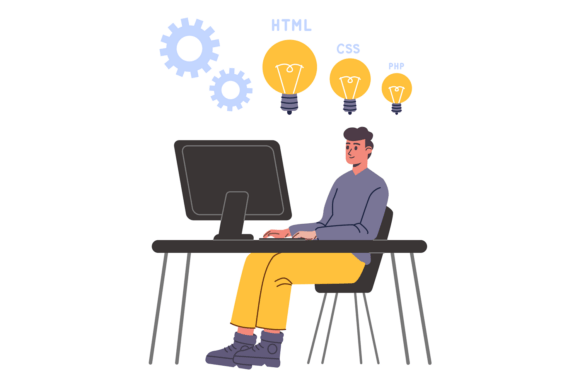
This specific vector illustration style, often featuring a person at a computer with a glowing idea lamp, is not just a generic stock image. It is a deliberate tool used by creators, educators, and business owners to tell a specific story about process, creativity, and technical skill. Whether you are buying an EPS file for a large banner or a JPG for a quick blog post, understanding where and why this visual works will help you make a smarter investment.
Where This Specific Visual Belongs
The versatility of a flat-style vector illustration makes it useful across many mediums. It is not tied to a specific brand color or corporate identity, which means it can adapt to your needs. People searching for a man working on a laptop or a game development theme typically need imagery for one of the following contexts:
- Personal Portfolios: Freelance developers and indie game creators use it as a header image to immediately signal their profession without needing a professional headshot.
- Educational Content: Online course platforms, tech blogs, and coding bootcamps use it to visually represent the “learning by doing” process.
- Marketing Materials: Small studios and tech startups use it in pitch decks, landing pages, and social media ads to humanize their technical services.
- Digital Products: E-books, checklists, and software guides use the lightbulb and laptop imagery to reinforce the theme of productivity and problem-solving.
The image of someone actively developing a game or writing code removes the guesswork for the viewer. Instead of reading a paragraph about what you do, they see it immediately.
Why Different Audiences Choose This Style
Different users pull different value from this graphic. It is not a one-size-fits-all solution, but a flexible tool that serves a variety of real goals. Here is how specific groups benefit from using a man with a laptop working on game development concept in their projects.
For the Independent Creator
If you run a small freelance operation, your brand is personal. You do not have a marketing team or a big budget for custom photography. A high-quality vector illustration becomes your visual identity. You might be a solo developer building mobile games or a freelancer taking on contract work for larger studios.
Using an image like this on your website or GitHub profile tells potential clients you are modern and approachable. The flat illustration style feels current without being overly trendy. It suggests you understand design thinking. One freelancer I worked with used this exact style for his LinkedIn banner. He reported that new connections often commented on the “lightbulb” graphic, saying it made his profile stand out in a sea of generic corporate headshots. It opened conversations about creativity, not just technical specs.
For the Educator or Course Creator
Teaching game development or software programming is challenging because you have to hold attention while explaining abstract logic. Visuals help students stay engaged. A cartoon flat style image of a boy or man working on a laptop breaks up heavy text and adds a human element to the page.
Consider a course creator building a curriculum on Unity or Unreal Engine. The course thumbnail needs to compete on YouTube or Udemy. A strong visual of a focused developer with an idea lamp promises that the content will be both practical and inspiring. It signals that the course is for people who want to build real projects, not just watch lectures. The “idea lamp” specifically suggests that the course will teach creative problem-solving, which is exactly what new game developers need to learn.
When using this asset for education, it helps to pair it with specific keywords in the alt text, such as “game development course” or “script writing tutorial,” so the visual reinforces the topic for both search engines and students.
For the Business Owner or Marketer
Small business owners who provide tech services or run co-working spaces often struggle to make their brand feel alive. Stock photos of conference rooms or generic city skylines are boring. A vector illustration of a person actively coding adds energy to a website or brochure.
If you are marketing a software development agency, you want clients to feel confident in your technical ability. An illustration of a developer working late on a project communicates dedication and skill. It also helps demystify what you do. Many small business clients do not understand the technical side of building an app or a game. Showing a person at a laptop with a lightbulb helps them conceptualize the work as creative and thoughtful, not just technical overhead.
This visual also works well for internal company culture decks. If you are trying to attract talent, an image that celebrates the creative grind of development can resonate with the kind of employees you want to hire.
Practical Tips Before You Download or Use This Asset
Jumping into a purchase without thinking about the specifics can lead to wasted money or a visual that does not quite fit your brand. Before you grab that EPS or JPG file, consider these factors.
Licensing Matters More Than You Think
If you are buying from a stock site, check whether the license covers commercial use. A personal license might be fine for a personal blog, but if you are using it on a company website, in a paid product, or in advertising, you often need an extended or commercial license. The last thing you want is a takedown notice because your logo or header image was not properly licensed. Always read the fine print on the specific marketplace you are using.
File Format and Scalability
The illustration described as “Man with Laptop Working. Gaming Developm” is likely offered in EPS (vector) and JPG (raster) formats. If you plan to use the image in print materials like flyers, banners, or business cards, you need the vector file. EPS files scale to any size without losing quality. JPGs are fine for digital use, like blog posts or social media graphics, but they will pixelate if stretched too large.
If you are a seasoned designer or working with one, always grab the EPS version. It allows you to tweak colors, remove elements, and adjust the composition to fit your exact layout. For example, you might want to change the color of the laptop to match your brand palette. A vector file makes that easy. A JPG locks you into the original artwork.
Matching the Aesthetic to Your Audience
Flat vector illustrations are popular because they are clean and fast to load. But they also carry a certain tone. This style tends to feel modern, friendly, and slightly informal. That is perfect for tech startups, indie game projects, and educational platforms targeting younger adults or hobbyists.
However, if you are presenting to a very traditional corporate board or working in government contracting, a cartoon flat style might feel too casual. In those cases, you might look for a more realistic illustration style. Always try to match the energy of the image to the expectations of your audience. The “idea lamp” and “boy creating computer games” vibe is great for encouraging creativity, but it may need to be balanced with more serious typography and layout if you are targeting enterprise clients.
Customization and Brand Fit
One of the biggest advantages of buying a flat vector EPS is the ability to customize it. Do you have strict brand colors? You can recolor the shirt, the laptop, or the lightbulb. Is the character depicted as a boy, but your audience is mostly working professionals in their thirties? You can sometimes adjust facial features or attire, or you may need to look for a more mature depiction.
Do not be afraid to edit the asset. The most successful brands take a stock vector and make it their own. Adding a subtle drop shadow, changing the background, or pairing it with your own typography turns a generic image into a signature visual for your brand.
The Real Message Behind the Image
At the end of the day, the man with a laptop working on game development is more than just a decoration. It is a statement about how work gets done in the modern economy. It celebrates the solo creator, the small team, and the process of turning an idea (the lightbulb) into a functional product (the game or software).
Whether you are a blogger writing about script writing best practices, a marketer building a landing page for a new app, or an educator designing a course for future programmers, this visual helps you connect with your audience on a human level. It says you understand the grind of debugging, the thrill of a breakthrough, and the solitary focus required to build something digital.
By choosing a visual that shows process and creativity, you are signaling that your content, your brand, or your product is built with care. For entrepreneurs, freelancers, and creators, that is the most important message you can send.