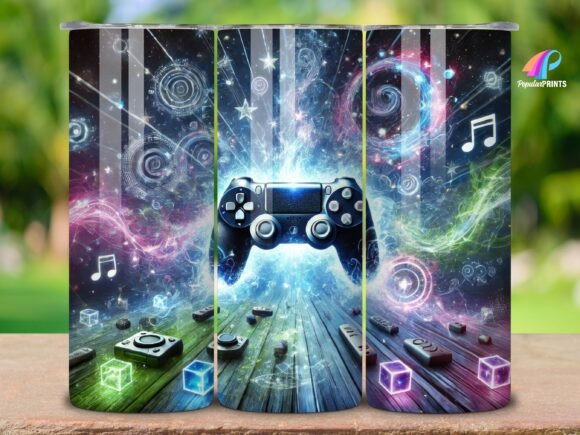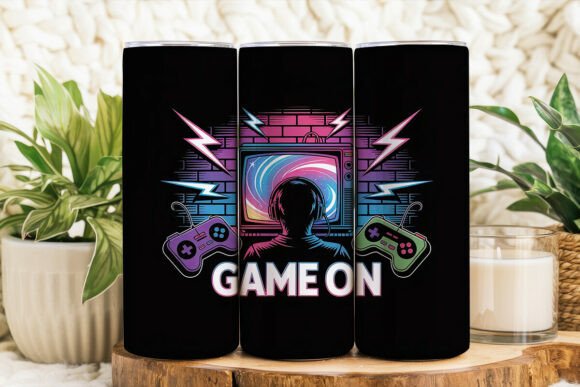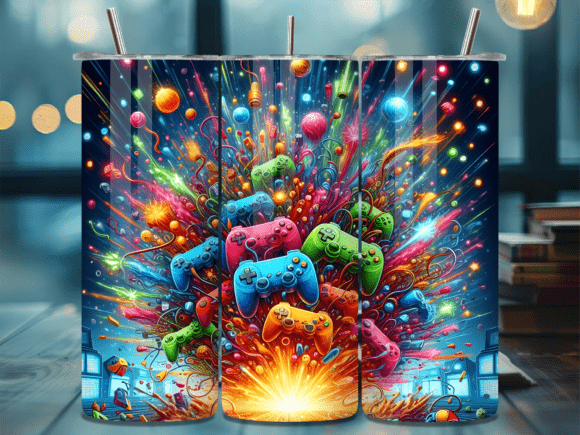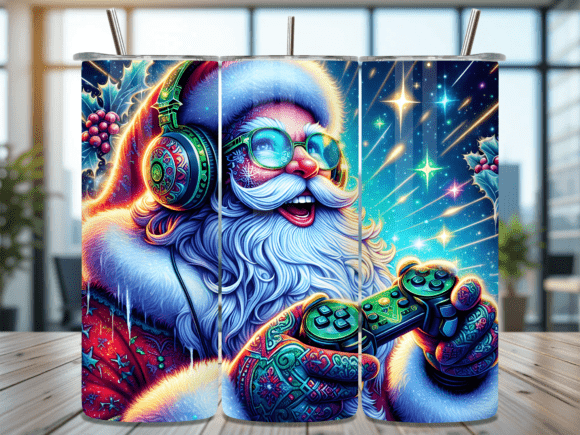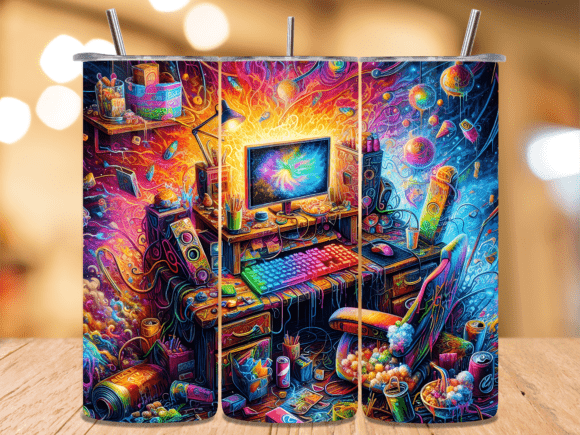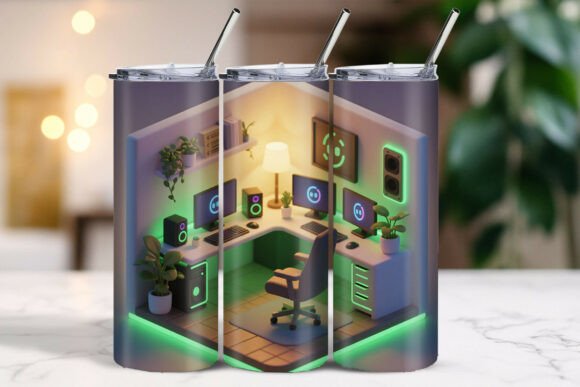
Isometric Cozy Gaming Corner Tumbler: A Practical Guide to Integrating Digital Wrap Designs into Your Workflow
Custom tumbler wraps have become a staple for small business owners, creators, and hobbyists who want to offer unique, visually striking products. The Isometric Cozy Gaming Corner Tumbler represents a specific blend of playful aesthetics and precise design work. Created through AI generation and then meticulously edited in Photoshop, this design offers a polished starting point that fits neatly into a repeatable production process. Whether you are a print-on-demand seller, a digital asset creator, or a marketer testing new visual concepts, understanding how to bring this kind of design into your workflow can save time, reduce friction, and improve consistency.
What Is the Isometric Cozy Gaming Corner Tumbler Design?
This design is a tumbler wrap that captures the look and feel of a cozy gaming setup rendered in isometric perspective. The visual style leans into warm, inviting tones and structured compositions that work well on drinkware. The final design file is available as a high-resolution PNG at 300 dpi, with dimensions of 9.3 by 8.2 inches (2790 by 2460 pixels). Both straight and tapered PNG formats are included, which matters more than many people realize when moving from digital file to physical product.
Because the artwork is AI-generated and then refined in Photoshop, you get the benefit of rapid concept generation paired with human-level polish. Edges are cleaned up, colors are balanced, and the layout is optimized for the curved surface of a tumbler. This hybrid creation process means you can spend less time starting from scratch and more time focusing on production, marketing, or customization.
Where This Design Fits in a Broader Workflow
For anyone running a small product line or a creative side business, the tumbler wrap is not the beginning or the end of the process. It sits somewhere in the middle. The design itself becomes a component that interacts with other decisions and tools. You might use it as a base layer for further customization, as a consistent asset across multiple tumbler sizes, or as a reference point for a themed collection.
Consider three common scenarios where a design like this becomes part of a larger chain of tasks:
- Before production: You evaluate the design for compatibility with your sublimation printer, tumbler size, and coating type. The straight and tapered PNG files allow you to test both standard and conical shapes without reworking the artwork.
- During production: The high-resolution 300 dpi file ensures clean transfers without pixelation or soft edges. Because the dimensions are generous, you can scale the wrap slightly up or down to fit different tumbler heights and circumferences.
- After production: The design can be repurposed for marketing materials, social media mockups, or as a visual anchor for a product line. The same PNG file can be imported into mockup templates or used in listing photos.
Each stage demands different attention. In the preparation phase, you check resolution and format. In production, you focus on alignment and heat transfer. After production, the design becomes part of your brand story.
How the Design Interacts with Other Tools and Platforms
Digital tumbler wraps rarely exist in isolation. They are typically brought into other software for layout, printing, or presentation. The PNG format gives you broad compatibility. You can open the file in Photoshop, Illustrator, Canva, Affinity Photo, CorelDRAW, or any standard image editor. This matters if your workflow spans multiple tools or you collaborate with a print partner who uses specific software.
If you use a heat press and sublimation paper, the straight and tapered versions allow you to match the paper shape to the tumbler geometry. A tapered PNG saves you from manually warping the design in your editing software. If you prefer to do your own warping using a tumbler press template, the straight PNG gives you a clean rectangular canvas to work with.
For mockups and product listings, you can layer the design onto photos of blank tumblers using blending modes and layer masks. Because the file is high resolution, it holds up well when resized for Etsy listings, Amazon product pages, or your own Shopify store.
Practical Implementation Tips
Getting a digital design onto a physical tumbler with consistent results takes more than just hitting print. Here are several observations that come from repeated use rather than theory:
Check your printer and paper settings before committing to a final transfer. The PNG file is delivered at 300 dpi, which is ideal for sublimation. But if your printer settings default to a lower resolution or if your paper is not matched to your ink type, the final image may look washed out or blurry. Run a small test print on regular paper first to verify sharpness.
Account for color shifts. The note about colors varying due to screen differences is not just a disclaimer. It is a practical reality. The RGB values you see on your monitor will convert to CMYK or to sublimation ink output differently. If color accuracy is critical for your brand or your customer base, print a test transfer on a scrap tumbler or coated tile before producing in bulk.
Scale with care. The dimensions of 9.3 by 8.2 inches are approximate and can be scaled up slightly or down. But scaling too far in either direction can distort the isometric perspective or make the text and details unreadable. A good rule of thumb is to keep scaling within 10 percent of the original size unless you are testing for a specific effect.
Organize your asset library. Because this is a digital download, you own the file and can use it repeatedly. Store the straight and tapered PNGs in a dedicated folder with clear naming conventions. Include a note about the design source, the date of purchase, and any custom edits you make. Over time, this habit prevents confusion when you have dozens of wraps to manage.
Workflow Examples for Different Users
For a print-on-demand seller: You receive an order for a 20-ounce tapered tumbler. You open the tapered PNG, confirm the dimensions match your sublimation paper size, and send the file to your printer. The design is ready to go with no additional editing. After printing and pressing, you photograph the finished tumbler using natural lighting and a clean background. That photo goes into your product listing. The same design can be offered for straight tumblers by using the other file version.
For a creator building a themed collection: You want to launch a series of gaming-inspired drinkware. The Isometric Cozy Gaming Corner Tumbler becomes the first piece. You use the straight PNG as a base to create coordinating designs by swapping out color palettes or adding subtle overlays in Photoshop. Because the original file is well-structured, you can work efficiently without rebuilding the composition from zero.
For a marketer or small business owner: You need visual content for a social media campaign around cozy lifestyle products. You use the tumbler design in a flat-lay mockup alongside a laptop, a controller, and a warm drink. The design is the focal point but blends naturally with other props. The high resolution means the mockup can be used across Instagram, Pinterest, and your website without looking pixelated.
Quality Control and Long-Term Use
Consistency matters when you produce multiple units of the same design or when you reorder a design months later. Because the PNG files are static and unchanged, you can rely on them to produce identical results every time if your printing process is stable. This is useful for batch orders or for restocking a popular item.
Over time, you may want to revisit the design and make small adjustments based on customer feedback or evolving trends. The fact that the file has already been through AI generation and Photoshop refinement means you have a strong foundation to build on. You can tweak the brightness, add a custom logo, or change the background color without starting over.
One practical habit is to keep a changelog for each design file. Note when you made edits, what you changed, and why. This is especially helpful if you work with a team or if you outsource printing to a third party. Clear documentation reduces the chance of using an outdated version.
Preparation and Compatibility Considerations
Before you download and use any digital tumbler wrap, it helps to verify a few things about your setup. The PNG files are large, so make sure your editing software can handle 2790 by 2460 pixels without slowing down. If you work on an older computer, resave the file as a compressed PNG or even as a JPEG for previewing, but always keep the original for final output.
The design is delivered as a digital download, so you will want a reliable way to store and back up your files. Cloud storage or an external drive works well. If you purchase the design and then lose the file, you may need to repurchase it, since mockups and photos are not included in the download and the listing clearly states this is a digital-only product.
Compatibility also extends to the physical tumbler. Not all tumblers have the same coating or diameter. The tapered version is designed for a conical shape, but slight variations between brands can affect how the wrap aligns. Measure your tumbler height and circumference before printing. If in doubt, print a paper test wrap and hold it against the tumbler to check fit.
Observations on Efficiency and Organization
Efficiency in this context is not about speed for its own sake. It is about reducing friction between having a design and delivering a finished product. Having both straight and tapered versions ready saves the step of manually distorting the image. Having a high-resolution file saves the step of upscaling later. Having a design that is already color-balanced and refined saves the step of heavy editing.
Organization matters because a single tumbler design can easily become part of a larger system. You might have ten different wraps for different seasons, events, or customer preferences. Keeping them named, tagged, and stored consistently means you can find what you need in seconds rather than digging through folders.
One simple method is to name files with the design name, format type, and date. For example: IsometricCozyGaming_Tapered_20250315.png. This small habit pays off when you are fulfilling orders late at night or delegating tasks to an assistant.
Final Thoughts on Integration
The Isometric Cozy Gaming Corner Tumbler is a specific design, but the process of integrating it into your work applies broadly. Whether you are new to tumbler production or have been doing it for years, the principles remain the same: understand your tools, test before committing, organize your assets, and build on solid foundations. The design itself does the visual work. The rest is up to your process.